
Edinburgh’s prime residential market has remained comparatively active through the first half of August, even as the national housing market has lost some momentum. The latest data shows that the wider Edinburgh, Lothians, Fife and Borders market remains capable of achieving prices above Home Report valuations. Despite the unsettled economic backdrop, values within Edinburgh’s prime segment remain broadly stable.
The contrast with the wider UK market is becoming increasingly pronounced. Nationwide reported annual UK house price growth of just 1.8% in July, while Lloyds’ index showed prices broadly flat. Scotland, however, recorded annual growth of 3.6% in the Lloyds data, underlining the relative strength of the Scottish market.
Market Data at a Glance
Average selling prices rose moderately year-on-year in the months of May to July, with homes achieving prices just exceeding Home Report valuations as the median selling time remains relatively short.
Still, there has been some moderation in competitive bidding. Fewer properties went to a closing date compared to last year and sales volumes are plateauing or even dropping slightly. These are signs of buyers no longer inclined to compete indiscriminately despite remaining active.
For Edinburgh’s prime period homes, that distinction is important. The market is not uniformly competitive: the strongest properties continue to command attention, while homes that are ambitious on price or require substantial expenditure are facing a more exacting audience. A strategic approach is the key to a successful sale.
UK National Context
Next week’s inflation figures’ announcement will be the next significant milestone for market activity and sentiment.
In the meantime, the UK’s new political administration is now settling into office, with Prime Minister Andy Burnham’s government facing the twin challenge of supporting growth while maintaining investor confidence in the public finances. The political transition has added another variable to an already complicated economic picture overall. Saying that, recent market movements suggest inflation and interest rates remain more immediate concerns for investors.
There has also been a notable shift in expectations around monetary policy. Bank of England Chief Economist Huw Pill argued this week that stronger-than-expected economic growth strengthens the case for higher rates. His comments followed the publication of data showing UK GDP grew by 0.4% in Q2, suggesting the economy has more underlying momentum than some earlier forecasts implied.
For Edinburgh buyers, the implication is that the prospect of materially cheaper borrowing has moved further into the future. Mortgage costs remain an important consideration, but the more significant change is that purchasers are increasingly having to make decisions on the assumption that today’s financing environment may persist.
Edinburgh Prime Home Local Market Dynamics
Edinburgh is showing greater resilience than the headline UK numbers suggest. The latest local data points towards a market that has become more selective rather than one that has simply stalled. Average selling times remain short, properties are still achieving more than Home Report valuation on average, and the prime segment has broadly maintained its value.
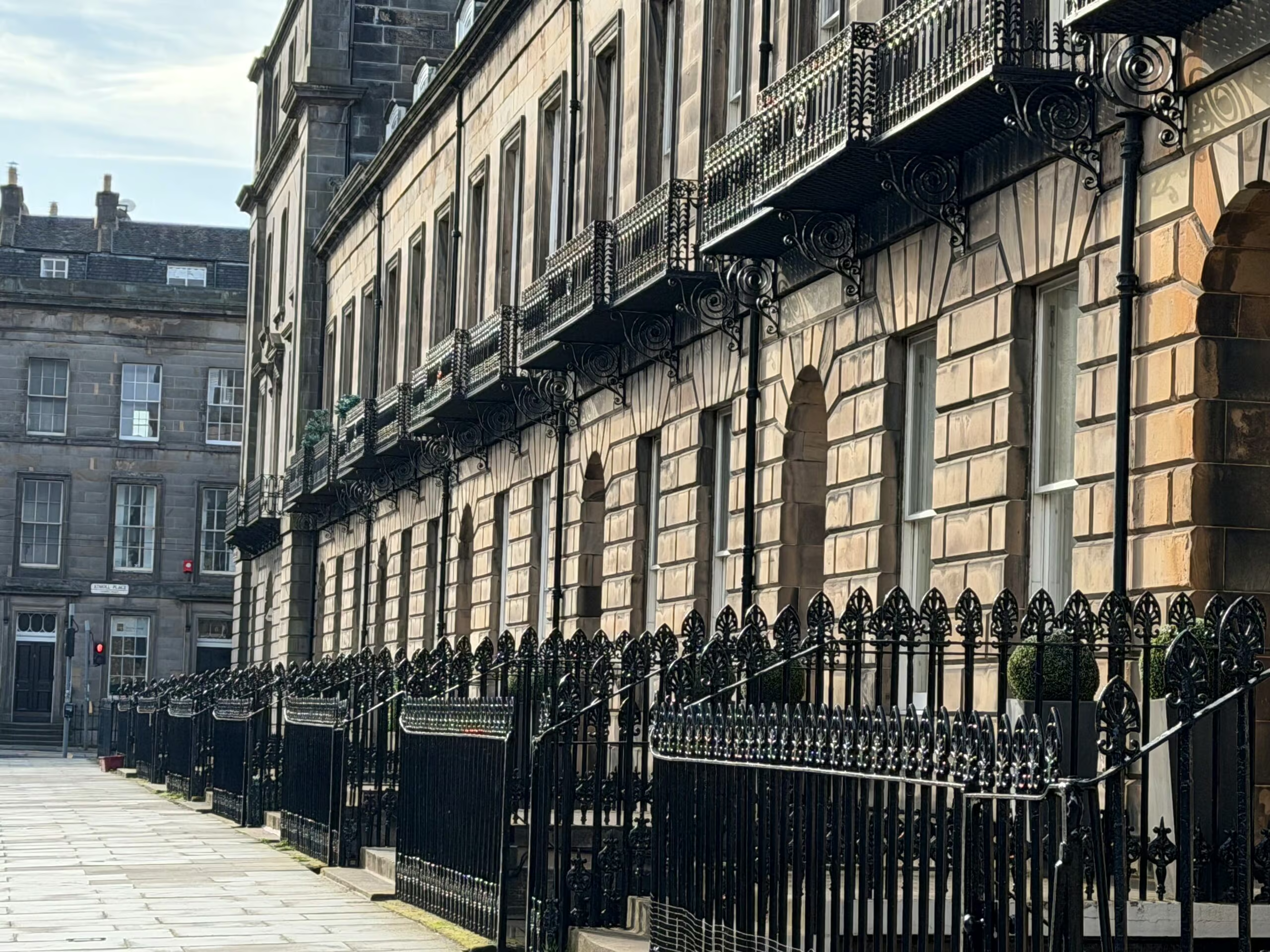
For period homes, quality is increasingly determining the outcome. Georgian and Victorian properties that combine architectural character with good condition, attractive outdoor space and a practical modern layout continue to stand out. Conversely, properties requiring substantial refurbishment are more likely to encounter negotiation as buyers factor construction costs and financing into their offers.
The August calendar also brings an important Edinburgh-specific factor: the festivals are transforming the city centre and increasing visitor numbers, with tourism activity particularly strong this year. That does not directly determine residential transactions, but it reinforces the city’s international profile at a time when Edinburgh continues to attract overseas and UK relocators.
Buyer Behaviour
Buyers appear increasingly comfortable operating within the current interest rate environment. Rather than waiting indefinitely for a significant reduction in mortgage costs, many are concentrating on finding the right property and assessing whether the asking price represents good long-term value.
There is, however, less evidence of buyers stretching simply to secure a home. The fall in closing-date transactions suggests that competitive bidding is becoming more targeted. Purchasers are prepared to compete when a property is genuinely scarce, but they are increasingly willing to walk away where pricing or condition does not justify a premium.
That distinction should favour Edinburgh’s best period properties. Scarcity remains a powerful advantage where there are few comparable homes available, particularly in tightly held streets and established family neighbourhoods.
Overall, Edinburgh is outperforming the national housing narrative. The latest local figures back up what we’re seeing at Ativa: prices are holding up with selling times remaining relatively short and buyers continuing to pay above Home Report valuation where justified. The market has undoubtedly become more selective, but that is not the same as a loss of demand.
For the period home sector, the shortage of genuinely desirable stock remains the key differentiator.
Market Outlook
The immediate outlook for Edinburgh remains more positive than the national picture.
The next significant tests will be the 19 August inflation release and the Bank of England’s September decision. For Edinburgh sellers, the current combination of active demand and relatively restricted premium stock remains favourable.
Guidance for Sellers & Buyers
For sellers, the latest evidence favours quality, pricing and timing. The strongest homes still command a premium, but the reduction in closing-date activity means that simply putting a property on the market is no guarantee of competitive bidding. A strategically prepared, well-judged launch and a price that reflects current conditions are increasingly important.
For buyers, the market offers more scope for considered negotiation than it did during the most competitive periods of recent years. Nevertheless, exceptional period homes remain difficult to replace, and buyers who find the right combination of location, architecture and condition should not assume that a softer national market automatically translates into substantial discounts in Edinburgh.
Edinburgh’s period home market remained active during the second half of July, with resilient buyer demand supported by easing inflation, an unchanged base rate of 3.75%, and growing confidence that financing conditions are becoming more predictable.
Final Thoughts
Edinburgh’s period home market continues to outperform a subdued UK housing market, but a strategic approach to listing your home is becoming more important as we’re heading into the second half of summer.
To learn more about your opportunities in this market, contact me, Fiona Vernon today by emailing [email protected] or phoning 07900 605674 now.