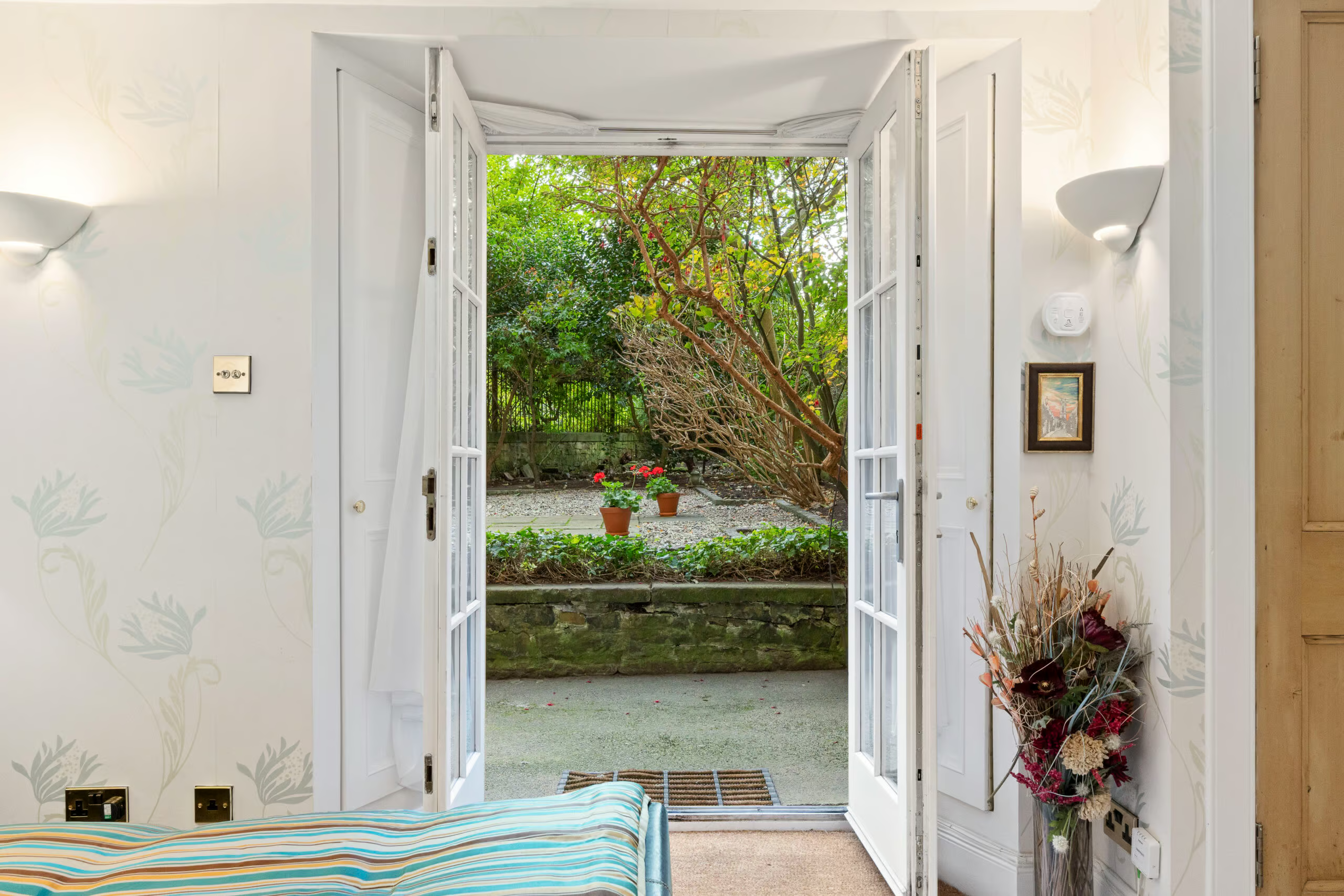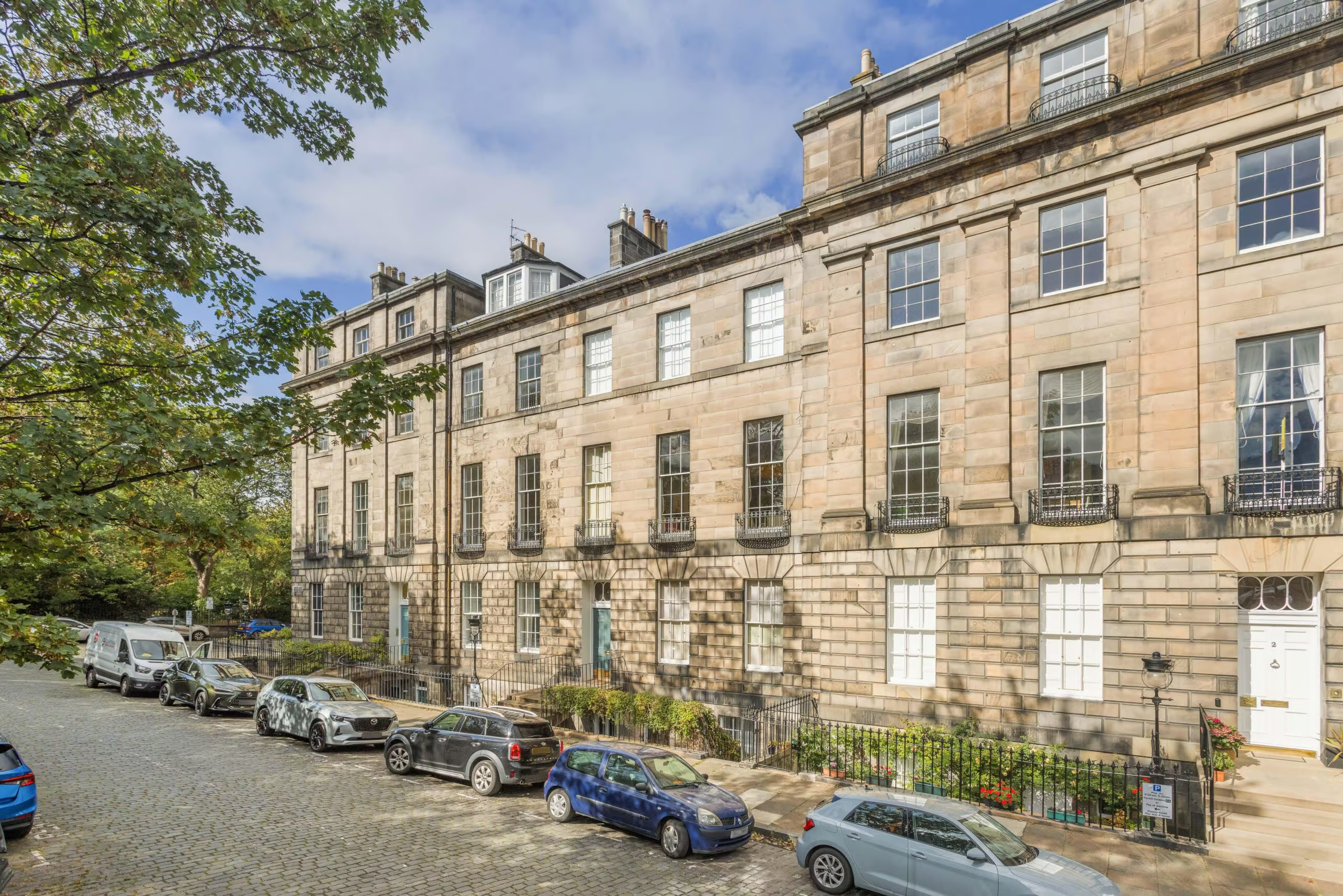
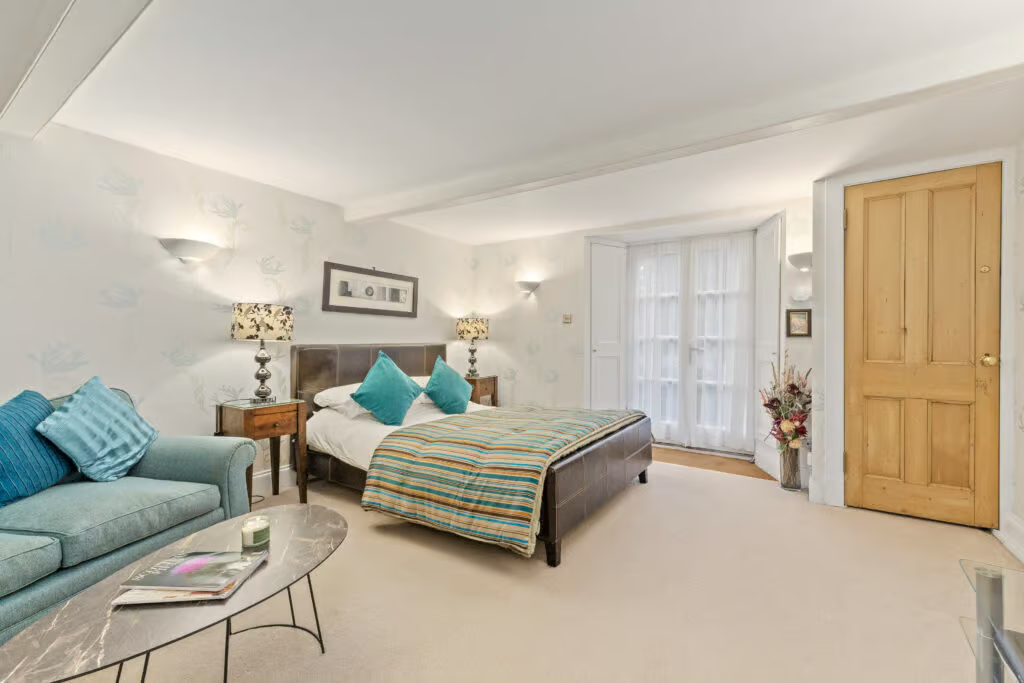
Early December has brought more of the stability and cautious optimism we saw return to Edinburgh period property sales recently. With the next bank of England base rate decision just ten days away, average fixed mortgage rates have now moved decisively below 5%, and lenders are continuing to trim selected products in anticipation of a possible pre-Christmas cut. Latest house price data shows an increase of just over 5% year-on-year, with demand continuing to be strong for well-presented prime homes. In a nutshell, the current situation continues to favour sellers who are realistic on price and disciplined in preparation.
Edinburgh Period Home Market Data at a Glance
Across Edinburgh and the Lothians, house prices grew by 5.1% between September and November, compared to the same period last year. Well-prepared properties achieved sales prices exceeding Home Report values at a similar level to 2024.
Average selling time increased from three weeks to 24 days, a slight rise over the course of the past year. The number of new listings across all market segments fell by nearly 9%, and while that number is not specific to period homes alone, it does highlight that demand continues to exceed supply.
Mortgage availability is better than it was at the start of the year. Commentators note that average two-year fixed mortgage rates are now around 4.86%, with five-year deals at roughly 4.91%, both below 5% for the first time since the 2022 mini budget. The psychological impact of rates dropping below 5% shouldn’t be underestimated.
Some lenders have even reduced selected two- and five-year fixed remortgage rates to the high-3% range for low-LTV borrowers. For premium buyers in Edinburgh, these shifts do not constitute ‘cheap money,’ but they do improve affordability and, importantly, sentiment.
UK National Context and Its Importance for Edinburgh
Nationally, the housing market is displaying a similar pattern of modest price growth, easing mortgage costs and gradually stabilising activity. While house prices remained fairly flat south of the border, transaction volumes are edging higher. The latest HMRC release shows seasonally adjusted residential transactions in October at 98,450, up 2% on September and the highest monthly figure since March 2025, though still slightly below October 2024 levels.
The Scottish Housing Market Review for Q3 2025 emphasises that Scottish house prices and activity have continued to recover, with average prices in Q2 up 4.4% year-on-year and mortgage availability gradually improving. Against this backdrop, the Bank of England’s decision in early November to hold the base rate at 4%, with the next call on 18 December, is being interpreted as the top of the rate cycle. Markets are increasingly expecting an initial cut if incoming inflation data remain benign.
Edinburgh Prime Property Local Dynamics
In Edinburgh’s premium period home districts demand remains robust for the right property, but some buyers are taking longer to commit and sellers are more measured about bringing homes to market. As we have said before, this is translating into a clear hierarchy: fully refurbished, conservation-compliant properties with strong documentation and sensible guides continue to attract solid interest and credible offers, while homes requiring extensive work or with unresolved planning or warrant issues are seeing less interest and more protracted negotiations.
Research indicates that sales activity in the £1m–£2m bracket has been relatively resilient, with purchaser demand strongest where quality and location intersect. In practice, that means that a well-handled Georgian townhouse on a prime New Town street, or a carefully modernised Victorian villa in Morningside, will likely attract competitive interest when brought to market strategically and with a thorough legal and technical pack.
Buyer Behaviour
Recent mortgage repricing is beginning to show up in buyer behaviour. Numerous borrowers comparing deals in November were looking at two-year fixed rates, with shorter-term fixes particularly popular among first-time buyers and remortgage customers who believe rates may fall further in the next two to three years. For premium buyers in Edinburgh, the same logic applies: many are choosing two- or five-year fixes that balance current affordability with the option to refinance if and when interest rates move down.
We are also seeing a distinction between cash-rich or low-LTV buyers and those closer to affordability limits. Cash and equity-heavy purchasers such as downsizers and some international returners remain relatively decisive when the right period home becomes available. They focus on condition, long-term liveability and neighbourhood quality. Mortgage-dependent buyers, by contrast, are still highly price-sensitive and often pause to reassess borrowing options whenever lenders adjust rates. Overall, the pattern is one of selective engagement: fewer speculative viewings, but more depth of diligence on a smaller shortlist of properties.
Market Outlook for Period Home Sellers
For the remainder of December and into early January, the key variable will be the Bank of England’s 18 December decision. A hold at 4.0% would likely preserve the current near-5% mortgage environment and support a steady Boxing Day Bounce. A cut to 3.75%, which some commentators now see as plausible given cooling inflation, could trigger a further round of lender repricing and bring more buyers off the sidelines, particularly in the £500k–£1m bracket.
Either way, the traditional increase in online search and valuation requests over the festive period is likely to reassert itself, with 2026 pipelines being built from decisions taken in the coming weeks.
Looking to the medium term, through the first half of 2026, the baseline expectation from official data and most independent analysis is for modest price growth, slowly improving affordability and stable to slightly higher transaction volumes. The Scottish Housing Market Review and UK HPI both point to Scotland outperforming the UK average on annual price growth while retaining a broadly sustainable trajectory. For Edinburgh’s premium period home segment, that suggests a continuation of the current market climate in which well-prepared, sensibly marketed period homes transact reliably, and where macro conditions support activity.
External factors to watch include the Scottish Budget in January, any changes to property-related taxation, and the pace and scale of base rate reductions once the easing cycle begins.
Final Thoughts
Edinburgh’s premium period home market is entering winter in stable but selective mode, rewarding the best-prepared Georgian and Victorian homes in areas like Stockbridge, the New Town, Morningside and Bruntsfield with steady, quality-driven demand.
To take advantage of the Boxing Day Bounce, contact me, Fiona Vernon by emailing [email protected] or phoning 07900 605674 now for more information.