

Following the latest Bank of England base rate decision, Edinburgh’s prime home market is becoming more discerning, not less desirable. The latest figures reveal a striking contrast: while prime sales across the wider region have fallen, Edinburgh’s £750,000-plus market has recorded higher average selling prices and an increase in new listings. Against a backdrop of rising borrowing costs, that points to a market where quality still commands attention, but buyers have become more selective about what they are prepared to pay.
The strongest Georgian, Victorian and Edwardian homes continue to benefit from scarcity and established location appeal. However, this is not a market in which every property can expect multiple offers. Condition, presentation, realistic pricing and a strategic approach to marketing are increasingly important in securing a successful sale.
Edinburgh Perion Home Market Data at a Glance
Looking at the most recent data for Edinburgh prime home sales, we see two different trends emerging. On one hand, activity dropped somewhat year-on-year. Still, average selling prices increased, and prime properties achieved prices above Home Report valuation. Some attracted offers in a matter of days.
At the same time, Edinburgh’s £750,000-plus segment performed more strongly. Market activity dropped less noticeably, while average selling prices rose more than they did in lower price segments. New listings also increased, giving qualified buyers more choice at the upper end. Properties went under offer in less than a month on average and sold above their Home Report valution.
Economic & Monetary Policy
On 5 November, the Bank of England raised its base rate by 0.25 percentage points, from 3.75% to 4%. The vote was eight members for 4% and one for a larger increase to 4.25%. The decision followed September inflation of 3.5%, with higher energy costs contributing to renewed concern about price pressures. Governor Andrew Bailey cautioned that the increase should not be interpreted as the beginning of an inevitable sequence of further rises.
The property industry’s reaction has been measured as much of the expected increase had already been reflected in mortgage pricing. Fixed-rate mortgages do not automatically change when the base rate moves, whereas tracker and some variable-rate borrowers are more directly affected.
For prospective buyers, the message is to assess actual mortgage offers rather than make decisions based on the latest headlines. Instead, secure advice and a decision in principle, and test monthly repayments against your budget. While cash buyers will remain unaffected by these changes, sellers should expect buyers to scrutinise affordability more carefully, especially where buyers are moving up the property ladder or refinancing.
Political & Financial Context
The UK Autumn Budget, delivered on 28 October, included changes to taxation of property income from April 2027. These are relevant to landlords and property investors, but do not directly alter the tax position of owner-occupiers simply buying or selling their family home. For Edinburgh’s prime market, the main consideration is whether changes to the economics of property investment affect the decisions of individual landlords and investors.
Scottish homeowners should also distinguish UK-wide announcements from proposals specific to Scotland, including the proposed additional council tax bands for properties valued above £1 million. These are separate policy matters, and their final details and implementation should be monitored rather than treated as settled changes.
Edinburgh Prime Property Local Market Dynamics
Based on Q3 figures, Edinburgh continues to outperform the wider regional market. The combination of price growth and an increase in listings suggests demand has not disappeared. Buyers have rather become more selective while the available choice has expanded.
There are notable differences between postcodes. EH10 achieved the highest average selling price relative to Home Report valuation, at 107.5%, while EH15 properties went under offer in a median of just 11 days. EH3 recorded the largest annual increase in average selling price, at 14.2%. These figures illustrate the importance of location, although individual postcode results can be influenced by the relatively small number and type of prime transactions.
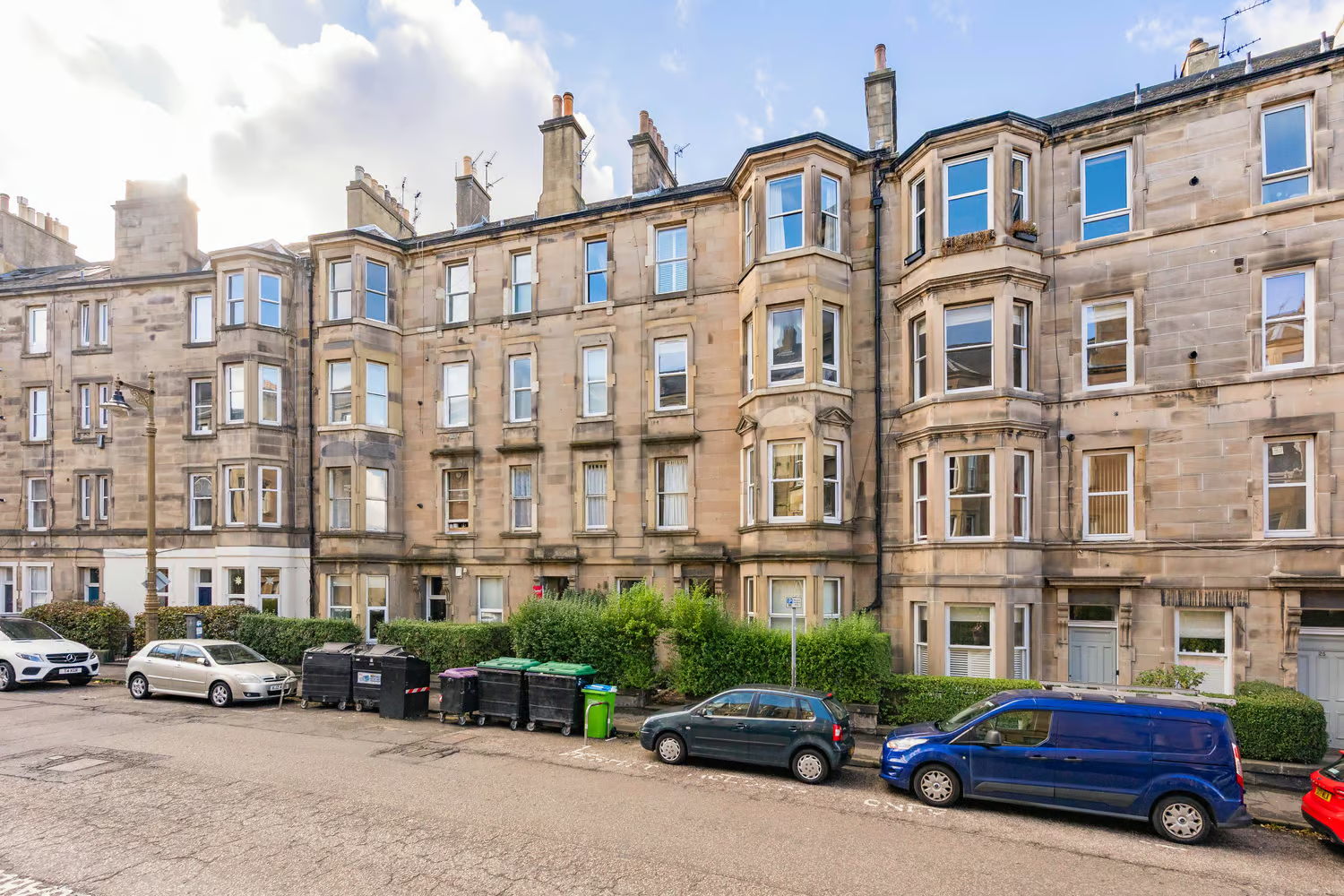
For period homes in the Grange, Merchiston, Morningside, Murrayfield, Stockbridge, the West End and the New Town, the appeal of architectural character, generous proportions and established neighbourhoods remains significant. But the increase in prime listings means buyers can now compare more options. A distinctive, well-maintained home is better placed than one requiring extensive work or carrying an ambitious asking price.
Buyer Behaviour
Buyers are increasingly weighing the full cost of ownership. For substantial period homes, that means looking beyond the purchase price to heating, maintenance, roof and window condition, refurbishment and future improvements. Higher mortgage costs can make these considerations more influential, particularly for households stretching to secure a larger property.
Experts believe that some buyers may pause following the rate rise, especially those facing refinancing or moving to a larger mortgage. However, the decision has not made fixed-rate borrowing uniformly more expensive overnight, as lenders had already anticipated some of the change. Buyers should compare available products and take advice rather than assume that waiting will necessarily improve affordability.
Cash purchasers are less directly exposed to mortgage rates but remain value-conscious. They may move quickly for a rare house with the right location, layout and outside space, while taking a more cautious approach to properties with significant compromises.
In short, the prime market is rewarding quality but not every high value home equally.
For sellers, scarcity is valuable only when the property’s condition, presentation and asking price support it. For buyers, a more measured market may create opportunities to negotiate on homes that have been available for some time, without assuming that exceptional properties will remain available indefinitely.
Market Outlook
The immediate outlook is for a cautious end to the year. Higher borrowing costs and economic uncertainty may restrain activity, while seasonal factors are likely to reduce the number of active buyers as December approaches. Yet Edinburgh’s latest prime figures do not suggest a broad retreat in values. The strongest homes continue to attract interest and achieve above Home Report valuation.
The next Bank of England decision is due on 17 December. Further changes will depend on inflation and the energy-price outlook. Another increase is possible but not predetermined. Buyers and sellers should therefore plan around current affordability and their own circumstances rather than rely on a particular rate forecast.
Guidance for Sellers & Buyers
Sellers should price against recent comparable evidence, not simply the highest result achieved by a neighbouring property. The home’s period features, proportions, condition and improvements need to be presented clearly, and we recommend addressing obvious maintenance concerns before marketing where possible.
Do not assume a closing date is guaranteed. It pays to respond to the level of interest actually generated. Be prepared to negotiate, particularly if the property requires significant work or has been on the market for some time.
Buyers are well advised to obtain mortgage advice and a decision in principle before making an offer. Compare actual mortgage products and factor maintenance and refurbishment into the budget for older properties. With more listings coming online, you may be able to use increased choice to negotiate where asking prices or condition justify it. Be ready to act when a genuinely rare property meets your requirements: the best homes can still move quickly.
Final Thoughts
Edinburgh’s prime period home market remains resilient, but with borrowing costs elevated and more choice at the top end, accurate pricing and genuine property quality will increasingly determine who achieves the strongest result. Scarcity still outweighs the benefit of waiting for a possible improvement in borrowing conditions.
Is this the right time to list your home? Contact me, Fiona Vernon, for a no-obligation chat today by emailing [email protected] or phoning 07900 605674 now.



Pingback: Economic and mortgage updates