
Edinburgh’s prime period home market enters November with its underlying resilience intact, although the combination of rising inflation, renewed pressure on borrowing costs and the Chancellor’s Autumn Budget has introduced greater uncertainty into the outlook. This week’s immediate focus is on Thursday’s Bank of England decision, with the prospect of an interest-rate increase becoming a serious consideration rather than a distant possibility.
The past three weeks have brought three significant developments: UK inflation has risen more sharply than expected, the Autumn Budget has introduced further tax changes affecting property income, and expectations of a November interest-rate rise have strengthened. These developments are likely to influence buyer confidence and affordability, particularly for purchasers using mortgages and investors holding higher-value rental property.
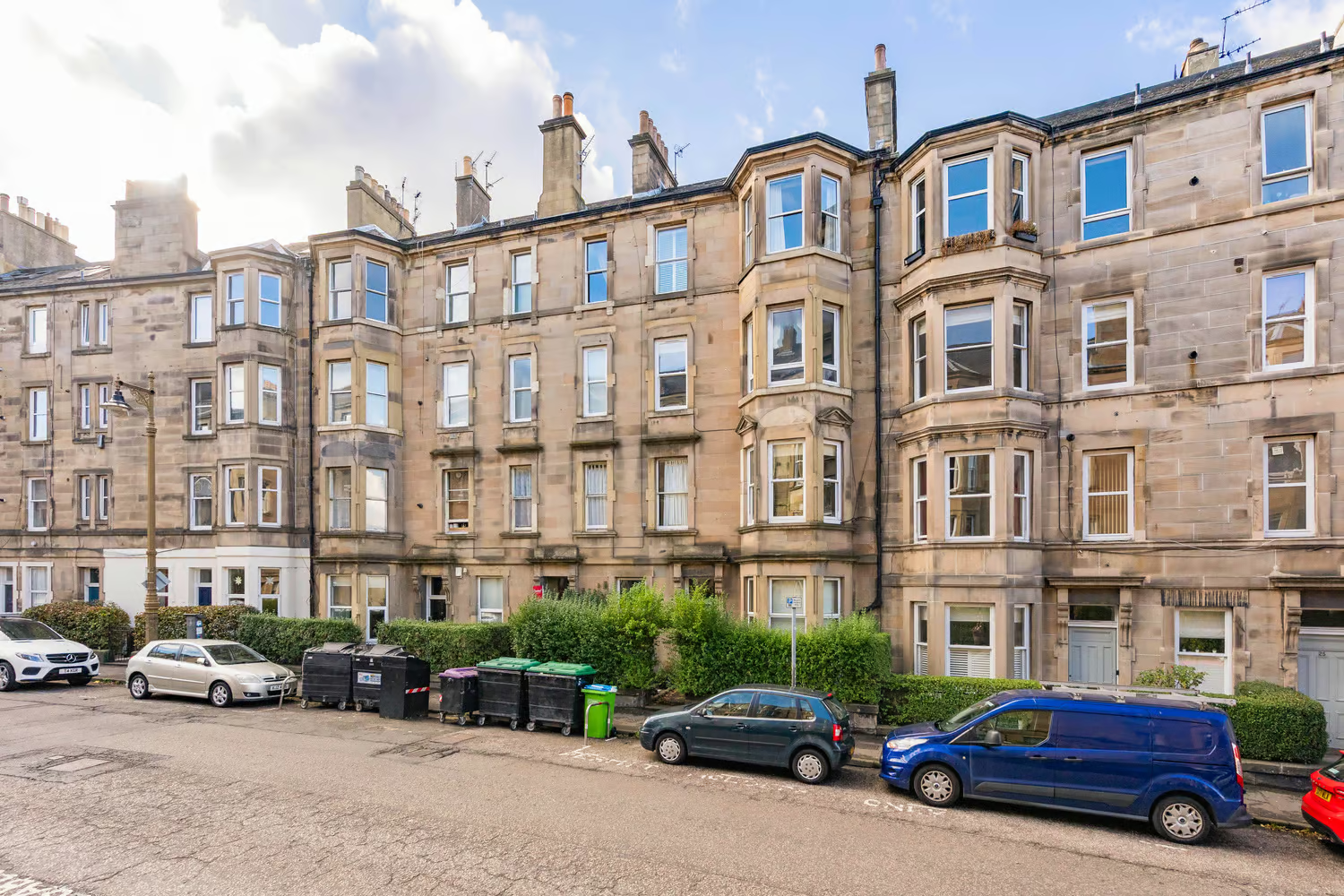
For Edinburgh’s Georgian townhouses, Victorian and Edwardian villas and substantial family houses, scarcity remains a determining factor. Local figures indicate prices above year-earlier levels and competition for well-presented homes. However, the national economic backdrop is becoming less supportive, and the market will reward realistic pricing and property quality rather than rely on the strength of demand alone.
Edinburgh Period Home Market Data at a Glance
The latest established local figures point to a steady but competitive market in the capital. The UK national picture is more subdued. The latest UK inflation and economic news has coincided with reports of slowing house price growth, while the RICS survey has indicated weaker buyer sentiment.
Edinburgh’s relative performance remains important: national weakness should not automatically be read across to prime Scottish property, where local supply, location and the limited availability of suitable period homes have a stronger influence on individual sale prices.
Economic & Monetary Policy
The latest inflation figures are the most significant economic development. The Office of National Statistics (ONS) reported on 21 October that CPI inflation rose to 3.5% in September, from 3.1% in August. The increase was driven in part by transport and motor-fuel costs, but the rise in core and services inflation makes the picture more concerning for the Bank of England ahead of its next interest rate decision.
Following September’s inflation rise, expectations of a November hike have strengthened considerably. Some economists now regard an increase as likely. However, it remains a forecast, not a confirmed decision. The Bank will need to judge whether higher energy costs are feeding into domestic wages and prices, and whether the weaker growth outlook argues for caution.
For the Edinburgh market, even a 0.25 percentage point increase may lead to higher borrowing costs for some buyers. Cash buyers are less exposed, but the wider effect on confidence and the return available on cash may influence purchasing decisions. Any rate rise will make accurate pricing more important for sellers seeking to secure a transaction before the end of the year.
Political & Financial Context
The Chancellor delivered the UK Autumn Budget last week. For property owners, the most relevant tax announcement is a further 2% increase in property-income tax rates from April 2027. The new rates are reported as 24% at the basic rate, 44% at the higher rate and 49% at the additional rate. This is relevant to landlords with residential investment property, including those holding higher-value Edinburgh homes to let. It is not a new tax on owner-occupied homes, and its effect on the prime sales market will depend on how landlords respond to the increased tax burden.
One important distinction for Scotland: the Budget’s High Value Council Tax Surcharge applies to properties in England, not Scottish homes. Scotland’s own proposals for additional council tax bands on properties valued above £1 million remain a separate Scottish Government matter. The UK Budget therefore did not introduce a new mansion-tax charge on Edinburgh’s prime owner-occupied period homes.
Edinburgh Local Market Dynamics
Edinburgh continues to have a different set of market drivers from many parts of the UK. The latest data shows buyers paying above Home Report on average, with selling times remaining relatively short. However, reduced sales volumes suggest that competition is concentrated around the most attractive properties rather than extending across the market as a whole.
For the prime period home market, the distinction between exceptional and average stock remains important. Well-maintained Georgian houses, substantial villas with good gardens and family homes in established school catchments continue to benefit from limited alternatives. Properties requiring significant refurbishment, or carrying ambitious asking prices, may face more resistance as buyers become increasingly conscious of financing and renovation costs.
Buyer Behaviour
The combination of higher inflation, the possibility of a rate rise and Budget uncertainty is likely to encourage a more measured approach from buyers. We may see changes in the speed of decision-making even when affordability is not an immediate obstacle.
Nevertheless, Edinburgh’s most desirable period properties remain difficult to replace. Buyers looking for a particular street, architectural style, garden or family layout cannot necessarily substitute another property simply because borrowing costs have increased. As a result, we believe that competition will remain selective: strong for scarce, well-presented homes, but more measured where pricing or condition gives buyers reason to negotiate.
Market Outlook
The immediate focus this week is the 5 November BoE decision. A rise from 3.75% to 4.00% would reinforce the higher-for-longer borrowing cost environment and could temper activity among mortgage-dependent buyers. A hold would provide some relief, but would not remove the underlying concern about inflation returning towards the 2% target. The direction of subsequent decisions will depend on whether September’s inflation increase proves persistent and whether domestic price and wage pressures continue.
Looking further into November and December, we expect Edinburgh’s prime market to remain comparatively resilient, although transaction decisions may become more considered. The limited supply of genuinely desirable period homes should continue to support values, but sellers will need to recognise that buyers are becoming more sensitive to price, condition and the cost of ownership. The next useful test will be whether the autumn market maintains its local momentum once the rate decision and Budget measures begin to feed through.
Guidance for Sellers & Buyers
For sellers, there is still a case for bringing exceptional period property to market, particularly where presentation and location are strong. However, pricing should reflect current conditions rather than assume that competition will automatically emerge. The next few weeks may offer an opportunity to engage buyers who wish to move ahead before the end of the year, but a realistic launch strategy will be important.
Prospective buyers should review financing carefully ahead of the November decision. A possible rate increase is worth factoring into affordability, but it should not be taken as a reason to assume that Edinburgh’s best properties will become materially cheaper. There may be more negotiating scope on properties requiring work or carrying ambitious asking prices. For genuinely scarce homes, the cost of missing the right property still outweighs the benefit of waiting for a possible improvement in borrowing conditions.
Final Thoughts
Edinburgh’s prime period home market remains underpinned by scarcity and resilient local demand, but rising inflation, the possibility of a November rate increase and the Budget’s changes to property-income taxation are likely to make buyers more selective as the market moves towards year-end. Still, scarcity supports the most desirable homes.
Would you like to know how your period home may far in this market? Contact me, Fiona Vernon, for a no-obligation chat today by emailing [email protected] or phoning 07900 605674 now.