
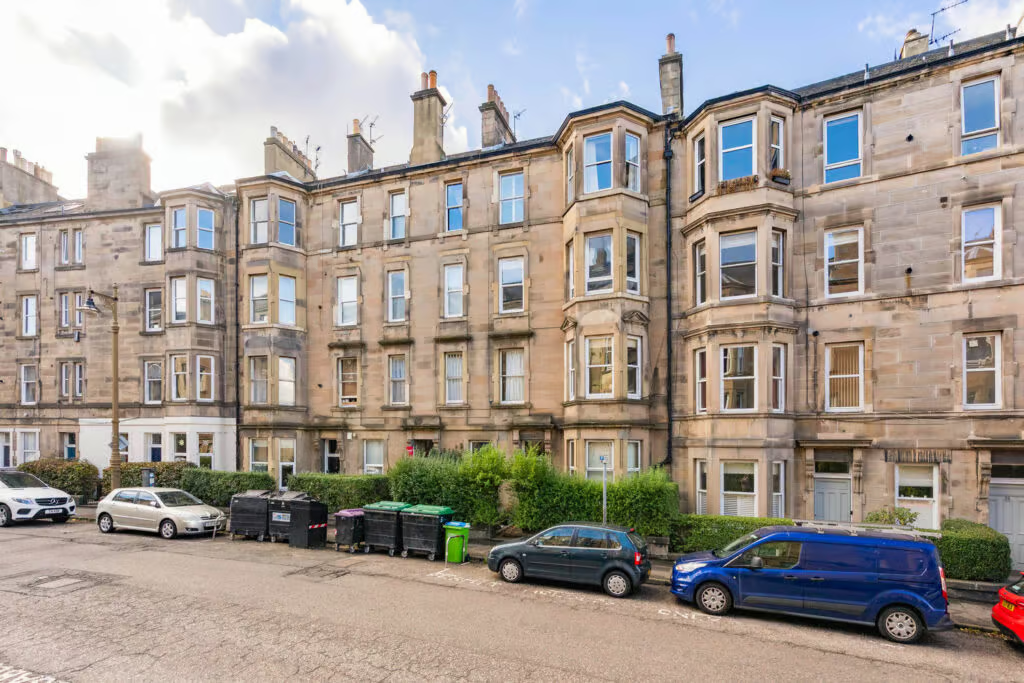
Edinburgh’s prime market is entering the winter period with a notable distinction: the wider housing market is losing momentum, but the capital’s higher-value homes have so far shown greater resilience. The latest prime figures point to rising average prices and more £750,000-plus properties coming to market, even as transaction numbers remain subdued. For buyers, that means greater choice; for sellers, it makes accurate pricing and presentation increasingly important.
The key issue is not whether demand has disappeared, but where it is concentrated. Distinctive period homes in established neighbourhoods retain an advantage, while properties requiring substantial work or carrying ambitious asking prices are more exposed to negotiation.
Edinburgh Period Home Market Data at a Glance
The latest ESPC prime review remains the most useful specific benchmark for Edinburgh’s upper end. In Q3, Edinburgh properties priced at £750,000 and above achieved an average selling price of 3.6% more than in the previous year. New listings also increased, and homes continued to go under offer relatively quickly.
The latest official UK House Price Index, covering September, put Edinburgh well ahead of Scotland’s averages. These figures are based on completed transactions and cover all property types, rather than the prime period home market, but they indicate that Edinburgh continues to compare favourably with Scotland overall.
Economic & Monetary Policy
The Bank of England’s 5 November increase in Bank Rate to 4% remains the most important recent change to the financing environment. For buyers, the practical picture is mixed. One mortgage update, using rates dated 21 November, put average two-year and five-year fixed rates at 5.49% and 5.46% respectively. It also noted that fixed mortgage pricing does not move automatically with the BoE’s base rate and that some lenders had made modest reductions around the time of the decision. Buyers should therefore compare live products and fees, rather than assume the November increase has made every mortgage more expensive.
Political & Financial Context
The wider financial climate remains challenging for households, with energy costs and inflation uncertainty influencing confidence and affordability. For Edinburgh’s prime market, these pressures are most relevant to buyers taking substantial mortgages and households moving into larger homes. Cash purchasers are less exposed to borrowing costs, but still weigh ownership costs and value carefully.
For owners in the Grange, Merchiston, Morningside, Murrayfield, Stockbridge, the West End and the New Town, the fundamentals remain property-specific. Architectural integrity, generous proportions, outdoor space, parking and the quality of modernisation continue to distinguish the most desirable homes. Hoever, more listings at the upper end mean buyers can compare condition and value more closely.
Buyer Behaviour
The national outlook is rather cautious, but this shouldn’t be treated as a direct measure of Edinburgh’s prime market.
In practical terms, buyers appear less inclined to stretch simply to secure a property. For period homes, the cost of refurbishment and ongoing maintenance can be decisive, particularly where mortgage affordability is already tight. Buyers are likely to scrutinise older roofs, windows, heating systems and structural condition before settling on an offer.
That does not mean the best properties will necessarily become cheaper. A rare home in an exceptional location may still attract prompt interest, while a house requiring major investment or priced ahead of comparable evidence may offer more room for negotiation.
The gap between national sentiment and Edinburgh’s prime-market performance is becoming more important.
For sellers, the challenge is to demonstrate why their property deserves a premium. For buyers, the opportunity is to be selective without assuming that every desirable home will be negotiable.
Market Outlook
The outlook into December is for subdued activity, with the usual seasonal slowdown compounded by affordability pressures. The next Bank of England decision is due on 17 December. Mortgage pricing, inflation data and developments in energy markets will be important influences on confidence in the weeks ahead.
Edinburgh’s prime market appears better placed than the broader UK market, but transaction volumes and individual property performance matter as much as headline averages. A stable market value does not guarantee a quick sale, particularly where the asking price fails to reflect buyers’ current choices.
Guidance for Sellers & Buyers
Sellers should price their property against recent, genuinely comparable sales, taking account of its condition and any improvements. Period features, modernisation and maintenance history should be presented clearly, helping buyers understand the value of the home. With more choice available, presentation is particularly important, and sellers should not assume that a closing date or multiple offers are guaranteed. A realistic approach to negotiation can help secure an achievable sale rather than allowing a property to remain on the market unnecessarily.
Buyers are well advised to obtain mortgage advice early and compare current fixed-rate products, fees and monthly repayments before making a commitment. Waiting for a possible reduction in interest rates does not necessarily mean securing a lower overall cost. Period properties also require careful assessment, so buyers should arrange appropriate checks and budget realistically for maintenance and refurbishment. Where a property has been marketed for some time, needs significant work or is priced above comparable evidence, there may be scope to negotiate. However, buyers should remain prepared to act decisively when an exceptional home in a sought-after location becomes available.
Final Thoughts
Edinburgh’s prime period-home market remains comparatively resilient, but as national buyer confidence weakens and choice increases, quality, condition and realistic pricing will matter more than ever.uirements: the best homes can still move quickly.
Would you like a more bespoke assessment of your proeprty or your situation in this market? Contact me, Fiona Vernon, for a no-obligation chat today by emailing [email protected] or phoning 07900 605674 now.



Pingback: Economic and mortgage updates